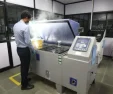
Why India Needs Reliable Material Testing Services for Industrial Growth

India is experiencing rapid growth in infrastructure, construction, manufacturing, and industrial development. As businesses expand and new projects emerge, maintaining material quality and safety has become increasingly important. Choosing a reliable Material Testing Laboratory in India helps industries verify the quality, strength, durability, and performance of different materials. Material testing ensures that raw materials and finished products meet applicable technical requirements, supporting better production practices and long-term industrial development.
Growing Importance of Material Testing in India
Material testing has become an essential part of India’s industrial and infrastructure sectors. Construction companies, manufacturers, engineering firms, and infrastructure developers depend on accurate testing to ensure that the materials they use are suitable for their applications.
India’s growing urban population and increasing infrastructure requirements have created a greater demand for quality construction materials. Cement, concrete, steel, aggregates, bricks, and other materials must meet appropriate specifications to ensure the safety and durability of buildings, roads, bridges, and industrial structures.
Similarly, manufacturing industries require consistent raw material quality to produce reliable products. Testing helps identify material defects, incorrect compositions, and performance-related issues before they affect production.
What Is Material Testing and How Does It Work?
Material testing is a systematic process used to evaluate the properties and performance of different materials. It involves conducting scientific examinations using specialized equipment and established testing procedures.
Depending on the material, testing may involve evaluating mechanical strength, chemical composition, hardness, flexibility, density, durability, and resistance to environmental conditions.
For example, concrete is tested to determine its compressive strength, while steel may undergo tensile and hardness testing. Similarly, aggregates are evaluated for properties such as grading, impact resistance, and water absorption.
These tests provide useful information about material quality and help businesses determine whether materials meet their technical requirements.
Importance of Professional Material Testing Services
Professional Material Testing Services help businesses maintain quality control throughout their operations. Instead of relying only on visual inspection or supplier information, organizations can use laboratory testing to obtain measurable data about their materials.
Some important advantages include:
1. Better Quality Control
Testing helps organizations verify the consistency and quality of raw materials before using them in manufacturing or construction activities.
2. Improved Safety
Material defects can create serious risks, particularly in buildings, bridges, industrial equipment, and other critical structures. Testing helps identify potential weaknesses.
3. Reduced Project Costs
Identifying defective materials at an early stage helps prevent expensive repairs, replacements, and construction delays.
4. Compliance with Standards
Testing supports verification against relevant Indian and international technical standards, depending on the material and application.
5. Increased Customer Confidence
Businesses that maintain documented quality control processes can demonstrate their commitment to reliable products and services.
Major Industries That Depend on Material Testing
Material testing supports various industries across India.
Construction and Infrastructure: Testing cement, concrete, steel, aggregates, bricks, and other construction materials is essential for maintaining structural quality.
Automobile Manufacturing: Vehicle manufacturers evaluate metals, rubber, plastics, and other components to ensure suitable performance.
Metal and Engineering: Mechanical and chemical testing helps determine whether metals and alloys are appropriate for industrial applications.
Manufacturing: Testing raw materials and finished products helps maintain production consistency.
Road Development: Testing aggregates, bituminous materials, and other road construction materials supports infrastructure quality.
Common Material Testing Procedures
Different testing procedures are used depending on the properties that need to be evaluated.
- Compressive Strength Testing: Determines how much compressive load a material can withstand before failure.
- Tensile Strength Testing: Measures the resistance of a material to pulling forces.
- Hardness Testing: Evaluates resistance to indentation and surface deformation.
- Chemical Analysis: Determines the chemical composition of a material.
- Water Absorption Testing: Measures the amount of water absorbed by materials such as bricks and aggregates.
- Impact Testing: Evaluates how materials respond to sudden forces.
- Durability Testing: Examines material performance under different environmental conditions.
These procedures help businesses understand material characteristics and make informed technical decisions.
How to Select a Reliable Material Testing Laboratory
Selecting the right laboratory is important for obtaining accurate and dependable test results. Businesses should consider several factors before choosing a testing partner.
First, check the laboratory’s accreditation and whether it follows relevant testing standards. Proper accreditation provides confidence that the laboratory meets applicable technical and quality requirements.
Second, evaluate the availability of modern testing equipment and experienced technical professionals. Qualified staff and properly maintained instruments are important for reliable testing.
Third, review the range of available testing facilities. A laboratory that offers testing relevant to your materials and industry can simplify quality assurance activities.
Finally, consider report accuracy, documentation, communication, and turnaround time. Clear reports help engineers, manufacturers, and project managers understand test results and take appropriate action.
The Future of Material Testing in India
The future of material testing in India is closely connected to industrial modernization, infrastructure expansion, and increasing quality expectations. As construction and manufacturing technologies continue to develop, the need for accurate and consistent material evaluation will also increase.
Advanced testing equipment, improved laboratory procedures, and better quality management practices can help industries achieve higher levels of reliability. Material testing will continue to support innovation by helping businesses evaluate new materials and improve existing products.
Conclusion
Reliable material testing is essential for India’s growing construction, manufacturing, and infrastructure sectors. It helps organizations verify material quality, improve safety, reduce operational risks, and maintain compliance with applicable standards. By choosing an experienced testing facility and using appropriate testing procedures, businesses can improve product reliability and achieve better project outcomes. Investing in professional material testing is an important step toward building a stronger, safer, and more quality-focused industrial environment in India.

Related Posts

How to Choose the Top Orthopedic Surgeon for Ligament Surgery in Bilaspur, Chhattisgarh
Hannah Campbell / November 6, 2026

Transforming Modern Media and Business Communication with AI Video Creation
Isabella / November 5, 2026

Surgical Gloves Manufacturers: Supporting Healthcare Excellence Through Quality and Innovation
Isabella / November 5, 2026
Recent Articles


ABOUT ME

I love to travel and then share my emotions with the readers. Thank you for following me on social media. Stay tuned for more updates!
Jenny Preston
ADVERTISEMENTS