
Best RDF Drone Technology for Search and Rescue
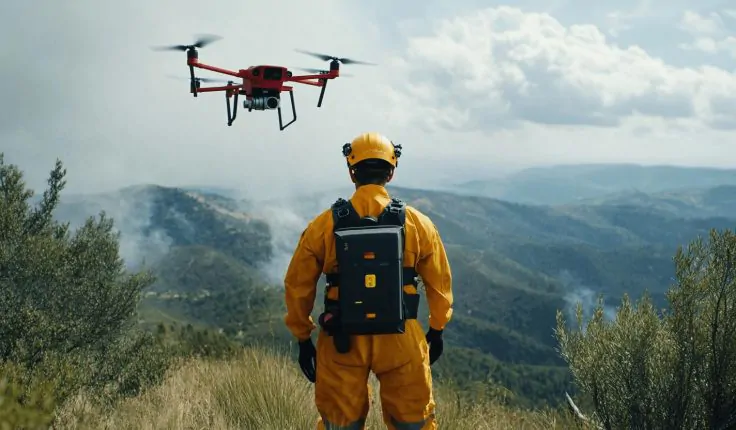
Search and Rescue teams are increasingly adopting advanced technologies to improve mission success rates and reduce the time required to locate missing persons. One of the most promising innovations in this field is the SAR App, which combines Radio Direction Finding (RDF) technology with drone-based operations to create a highly effective aerial search solution. As rescue organizations look for the best RDF drone technology for search and rescue, modern RF detection systems are proving to be valuable tools that enhance situational awareness and operational efficiency.
The Growing Role of RDF Technology in Search and Rescue
Traditional search methods often depend on visual observation, ground patrols, and thermal imaging systems. While these techniques remain important, they can be limited by terrain, weather conditions, and visibility challenges. RDF technology introduces an additional layer of intelligence by detecting wireless signals emitted from smartphones, smartwatches, Bluetooth devices, and other electronic equipment carried by missing individuals.
By integrating RDF technology with drone platforms, rescue teams gain the ability to search larger areas while simultaneously collecting valuable signal intelligence. This combination significantly improves the probability of locating subjects quickly.
AI-Powered Heatmaps Improve Operational Awareness
One of the key features that make the SAR App one of the best RDF drone technology for search and rescue solutions is its AI-powered live heatmap system. Rather than displaying complex RF data in a technical format, the platform converts signal detections into easy-to-understand visual maps.
Drone operators can instantly identify areas showing stronger signal activity and focus their search efforts accordingly. This real-time visualization enables rescue teams to make faster and more informed decisions during critical missions.
The ability to see signal concentration patterns on a live map helps eliminate guesswork and improves overall mission efficiency.
Flexible Drone Integration for Any Mission
Modern Search and Rescue operations require equipment that can adapt to changing environments. The SAR App offers exceptional deployment flexibility through its modular architecture.
Rugged Android devices can function as mobile Radio Direction Finder units and can be mounted on:
- Drones and UAVs
- Search vehicles
- Survival vests
- K9 harnesses
- Portable field equipment
Because the platform is hardware-flexible, organizations can integrate it into existing workflows without investing in expensive proprietary systems.
Faster Area Coverage Through Aerial RF Scanning
One of the biggest challenges in Search and Rescue missions is covering large operational zones within a limited timeframe. Drone-mounted RDF systems provide a major advantage by allowing responders to collect RF intelligence from the air while surveying extensive areas.
Instead of relying solely on ground teams, aerial RF scanning enables operators to:
- Search larger territories faster
- Reduce repetitive manual searches
- Identify potential target locations quickly
- Improve resource allocation
- Enhance overall mission effectiveness
The result is faster search completion and improved locate probability.
Reducing Operator Workload During High-Stress Missions
Search and Rescue missions often place significant pressure on responders. Interpreting raw RF signal data manually can be time-consuming and challenging, particularly during emergencies.
The SAR App addresses this issue by automatically processing detections and presenting simplified heatmaps, signal indicators, and directional guidance. This user-friendly interface reduces cognitive workload and allows teams to focus on rescue operations rather than technical analysis.
By simplifying complex data, the platform supports quicker tactical decisions and lowers responder stress levels.
Suitable for Multiple Rescue Environments
A major advantage of advanced RDF drone technology is its versatility. The system can support a wide range of Search and Rescue operations, including:
Wilderness Search and Rescue
Large forests, mountains, and remote terrain can be difficult to search manually. Drone-based RDF technology helps locate signal sources across vast areas.
Coast Guard Operations
Water rescue missions benefit from aerial signal detection that can identify electronic devices carried by missing persons.
Urban Search and Rescue
Dense environments often create visibility challenges. RF detection adds another layer of intelligence that complements traditional search methods.
Disaster Response
Following earthquakes, floods, or other emergencies, wireless signal detection can assist teams searching for survivors.
K9 Search Teams
The technology can also be integrated with K9 operations, improving coordination between canine units and aerial search assets.
Why Rescue Organizations Are Choosing RDF Solutions
As technology continues to evolve, more rescue organizations are adopting RDF systems because they offer measurable operational benefits. These include:
- Improved locate probability
- Faster mission completion
- Greater aerial coverage
- Enhanced situational awareness
- Reduced operator workload
- Easy deployment and scalability
These advantages make RDF technology an increasingly important component of modern Search and Rescue operations.
Conclusion
Organizations searching for the best RDF drone technology for search and rescue require solutions that combine efficiency, flexibility, and real-time intelligence. The SAR App delivers these capabilities through advanced RF Detection, Radio Direction Finding technology, AI-powered heatmaps, and seamless drone integration. By helping teams locate missing persons faster, increase aerial coverage efficiency, and reduce operational workload, the SAR App represents a modern and scalable solution for today’s Search and Rescue professionals.

- TAGS :
Related Posts

Why Oracle Software License Audit and Oracle Licensing Consulting Are Essential for Business Compliance
Lucas Reed / July 3, 2026

Why Hiring an Honest Hacker for Hire Can Strengthen Your Cybersecurity
Hannah Campbell / July 1, 2026

Why Hiring a Hacker for Hire Can Strengthen Your Cybersecurity
Hannah Campbell / June 15, 2026
Recent Articles


ABOUT ME

I love to travel and then share my emotions with the readers. Thank you for following me on social media. Stay tuned for more updates!
Jenny Preston
ADVERTISEMENTS